


5 Carbon Data Sources Most Businesses Already Have
Updated: Jul 22
When you start carbon tracking, it can feel like a big task.
One of the most common concerns we hear is, 'Where do we even get the data from?'
The good news is, many businesses already have access to valuable carbon data without even realising it.
In fact, some of the information needed to begin measuring emissions is often sitting within systems, reports, and records that teams use every day.
If you're looking to start your business carbon tracking journey, here are five carbon data sources you may already have access to.
Why Existing Business Data Is A Great Starting Point For Carbon Tracking
One of the biggest misconceptions around carbon tracking is that you need to start collecting huge amounts of new data before you can begin.
In reality, many businesses are already gathering useful information every day through their normal operations that can be used to start-off their emissions tracking.
That's why we're going to walk you through five carbon data sources you may already have access to, helping you take the first steps towards carbon tracking with confidence.
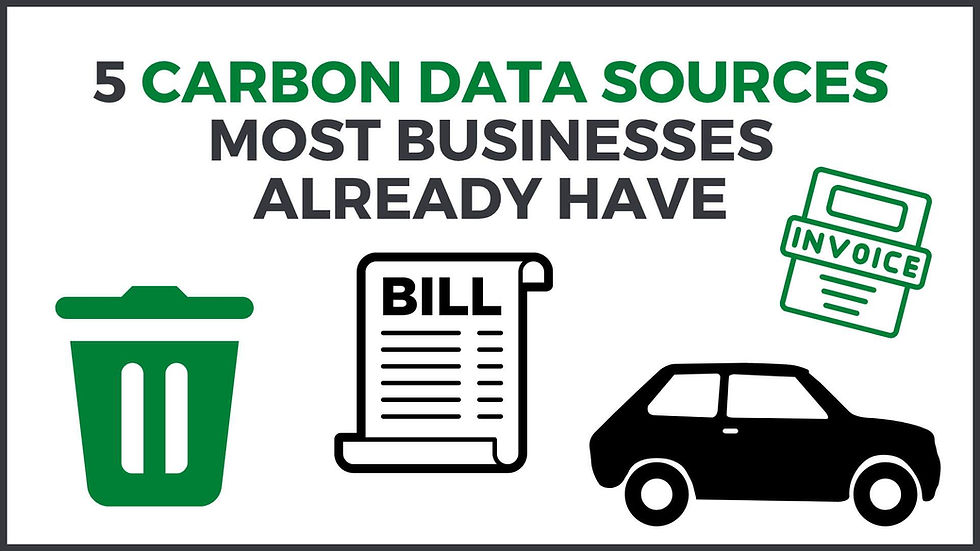
Utility Bills
Utility bills are often one of the easiest places to start.
Your electricity, gas, and water bills contain data that can help you understand the emissions linked to your buildings and operations.
Most businesses already receive this information regularly, making it a simple and accessible starting point for carbon tracking.
Even if you only begin with a few months of data, you'll start building a clearer picture of your environmental impact.
Travel Bookings
Business travel can be a significant source of emissions for many organisations.
If your team books flights, trains, hotels, or hire cars through a central system, you may already have valuable travel data available.
Looking at travel records can help you understand how often employees travel, which transport methods are being used, and where some of your largest travel-related emissions may come from.
Fleet Records
If your organisation operates company vehicles, fleet records can provide another useful source of carbon data.
Information such as fuel purchases, mileage records, and vehicle usage can all contribute towards understanding your transport emissions.
Many businesses already collect this information for operational or financial purposes, making it easier to incorporate into carbon reporting.
Supplier Invoices
Your supplier invoices can reveal much more than just spending.
They can help identify the products and services your business purchases regularly, providing useful insight into supply chain emissions.
While supply chain reporting can become more detailed over time, invoices are often a practical place to begin understanding where emissions may exist within your procurement activities.
Waste Reports
Many waste management providers already supply reports showing waste volumes, collection frequency, and recycling rates.
If your business receives these reports, you may already have access to data that can support waste emissions tracking.
Understanding how much waste is being generated, and where opportunities exist to reduce it, can become an important part of your wider sustainability strategy.
Getting Started Is Often Easier Than You Think
One of the biggest misconceptions about carbon tracking is that you need to collect lots of new data before you can begin.
In reality, many organisations already have access to useful information through their day-to-day operations.
The most important thing is simply getting started.
Once you understand what data you already have available, it becomes much easier to identify gaps, improve accuracy over time, and build a clearer picture of your organisation's carbon footprint.
At Scope, we help businesses bring existing data together into one place, making carbon tracking feel simpler, more manageable, and far less overwhelming than many people expect.


Comments