


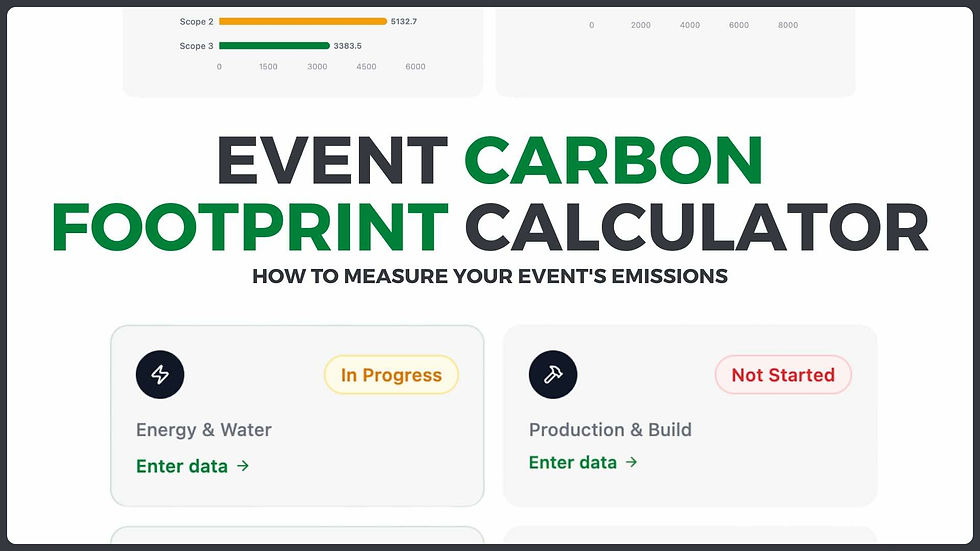
Free Event Carbon Footprint Calculator: How to Measure Your Event's Emissions
If someone has asked you to calculate the carbon footprint of an event, it's easy to assume you'll need specialist knowledge.
In reality, that's rarely the case.
Most event organisers already have much of the information they need. You know where the event is taking place, roughly how people will travel, who's providing the catering and whether guests are staying overnight.
The challenge isn't collecting the data. It's understanding what it means.
A free event carbon footprint calculator helps bring those pieces together. It estimates the greenhouse gas emissions associated with your event, giving you a clearer picture of where your biggest impacts are and where you have the opportunity to reduce them.
Whether you're planning a conference, exhibition, awards dinner or corporate event, measuring your event emissions is the first step towards making informed sustainability decisions.
If you're looking for a straightforward place to begin, Scope Carbon Tracking offers a free account, allowing you to calculate your event emissions before deciding if you need a different tier to support your reporting.
Why Are Event Organisers Measuring Carbon Earlier?
Not that long ago, most organisations only looked at carbon emissions after an event had finished.
The data was useful for annual reporting or demonstrating progress to clients, but it rarely changed the outcome because every decision had already been made.
Today, more organisations are using an event carbon footprint calculator during the planning process because that's when the data has the greatest value.
Imagine you're deciding between two venues. One is in the centre of a city with excellent rail connections. The other is further out and will require most delegates to drive.
On paper, they may seem like equally good options. From a carbon perspective, they could be very different.
The same applies to accommodation, supplier locations, freight routes and catering choices. Every decision influences your event emissions.
Measuring your event's carbon footprint before contracts are signed gives you the opportunity to make informed choices rather than simply reporting the outcome afterwards.
Carbon data is far more useful when it helps shape decisions instead of documenting them.
What Does an Event Carbon Footprint Calculator Measure?
This is often where people expect the process to become complicated, but in practice, it just comes down to the activities that make up your event.
For many conferences, exhibitions and corporate events, attendee travel is the largest source of emissions. Flights, rail journeys, taxis and private vehicles all contribute to your overall carbon footprint.
Accommodation is another significant factor, particularly for multi-day events where delegates, speakers or exhibitors stay overnight.
Your venue also plays an important role. Electricity, heating and cooling all contribute to operational emissions, while catering choices influence the footprint of the food and drink served throughout the event.
Freight and logistics are often overlooked. Transporting staging, exhibition stands, AV equipment and promotional materials all generate emissions before the first guest arrives.
Waste and materials complete the picture. Printed signage, exhibition graphics, giveaways and food waste may not seem significant individually, but together they can have a noticeable impact.
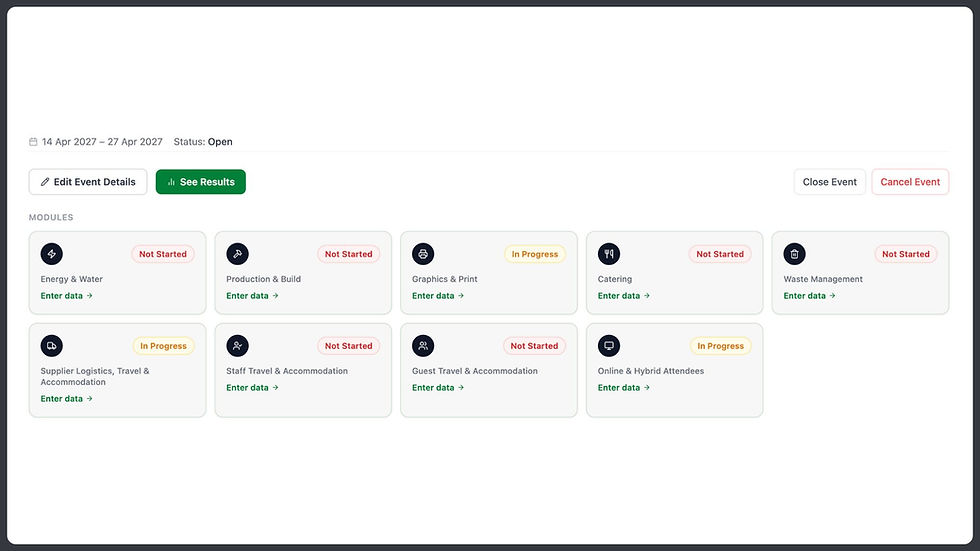
A good event carbon calculator brings all of these areas together, helping you understand not only your total emissions but where they come from.
That's the information that allows you to make meaningful improvements and reduce your event emissions over time.
How Do You Calculate Your Event's Carbon Footprint?
One of the biggest misconceptions about carbon reporting is that it's a long, technical process reserved for sustainability specialists.
Most event organisers already have the majority of the information they need:
Delegate numbers.
Venue details.
Travel plans.
Supplier information.
Catering requirements.
Accommodation bookings.
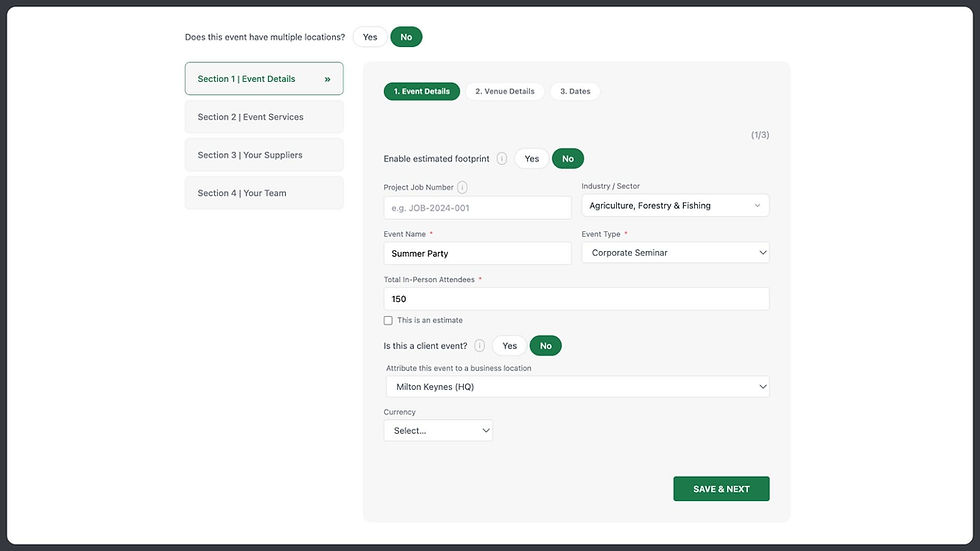
A good event carbon footprint calculator uses this information to estimate greenhouse gas emissions across the different parts of your event.
Rather than relying on manual calculations, it applies recognised emissions factors and gives you a clear overview of where your impact comes from.
Once you've measured your event emissions, you can identify the areas with the greatest environmental impact and start looking for practical ways to reduce them.
Why An Event Carbon Footprint Calculator Is Better Than A Spreadsheet
Spreadsheets are often the first step, and for a single event, they can work perfectly well.
But when you're tracking multiple events, reports are required and other users are updating the spreadsheet without any structure, it can be impossible to keep track of each file and calculation used.
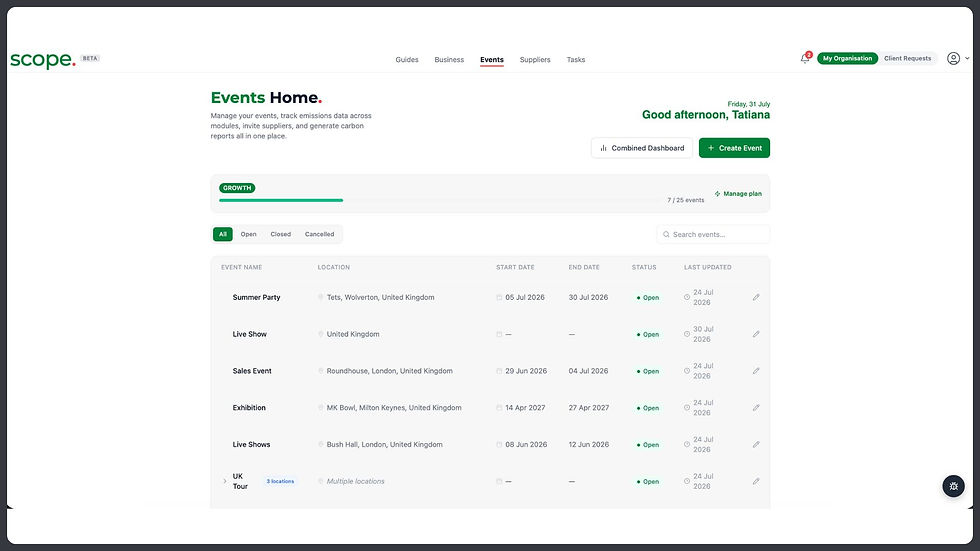
A dedicated free event carbon calculator keeps everything in one place, making it easier to calculate event emissions, compare performance over time and produce consistent reports whenever clients or stakeholders need them.
Why Choose Scope's Event Carbon Footprint Calculator?
There are plenty of carbon calculators available online, but very few have been designed specifically for the events industry.
Scope Carbon Tracking has been built around the way event professionals actually work, including measuring emissions from attendee travel, accommodation, venues, catering, suppliers, freight and waste in one place.
Once you know where your emissions are coming from, it becomes much easier to reduce your event emissions, compare events over time and provide meaningful sustainability reporting to clients, stakeholders and your wider organisation.
The free Scope account is designed to help you get started. You can begin measuring your event's carbon footprint today, explore the platform at your own pace and upgrade only if your reporting requirements grow.
Or if you need further support, our team are happy to help with a free software demo!
Frequently Asked Questions
How do you calculate the carbon footprint of an event?
You collect information about the main activities associated with your event, including travel, accommodation, venue energy, catering, logistics and waste. An event carbon footprint calculator uses recognised emissions factors to estimate the greenhouse gas emissions generated by each activity and combines them into an overall event carbon footprint.
What usually creates the most emissions at an event?
For many business events, attendee travel is the largest contributor. Accommodation, venue energy, catering and freight can also account for a significant proportion of an event's carbon footprint.
Can I calculate my event's carbon footprint for free?
Yes. Scope Carbon Tracking offers a free account, allowing you to measure your event emissions and understand where your biggest impacts are before upgrading to additional reporting features.
When should I calculate my event's carbon footprint?
The earlier, the better. Using an event carbon footprint calculator during the planning stage gives you time to make changes that reduce your environmental impact. Measuring actual emissions after the event supports carbon reporting, benchmarking and planning future events.
Start Measuring Your Next Event
Understanding your event's carbon footprint shouldn't feel overwhelming.
Most of the information already exists, the real value just comes from bringing it together in a way that helps you make better decisions.
Whether you're responding to client sustainability requirements, preparing ESG reports or looking to improve your approach to event sustainability, measuring your emissions gives you a clear starting point.
If you're ready to calculate your event's carbon footprint, create a free Scope Carbon Tracking account today.
You'll be able to measure your event emissions, identify opportunities to reduce them and build a more consistent approach to event carbon reporting as your events grow.
No spreadsheets. No complicated setup. Just a straightforward way to understand your impact and start making more sustainable event decisions.


Comments